
News
June 11, 2026
IVADO Unveils Seven New Research Projects Supported Through its Exploratory Projects Program
Montreal, June 11, 2025 – IVADO is pleased to announce the funding of seven new projects through its Exploratory Projects Program.
This program supports small- to medium-scale research projects that are innovative, bold and ideally cross-sectoral or interdisciplinary, enabling the exploration of new ideas aligned with IVADO’s R3AI initiative. It is specifically designed to support the development of early-stage research projects, notably through funding for graduate students and postdoctoral researchers working on these initiatives. More information is available on the Exploratory Projects Program page.
Funded Research Projects
Exploring the Capacity of a Large Language Model (LLM) to Act as a Mediator in Complex Mediation Processes

Principal Investigator: Karim Benyekhlef, Faculty of Law (Université de Montréal)
Co-Investigators: Nicolas Vermeys (Université de Montréal), Laurence Marquis (Sherbrooke), Hannes Westermann (Maastricht)
Funding awarded: $100,000
LLMediator is an online dispute resolution platform powered by large language models (LLMs), designed to assist and, when appropriate, complement the work of human mediators in resolving disputes. Developed by the Cyberjustice Laboratory under the leadership of Professors Karim Benyekhlef and Nicolas Vermeys, the platform leverages the capabilities of state-of-the-art LLMs to optimize negotiation and mediation processes, particularly in the context of high-volume, low-intensity disputes. LLMediator aims to transform dispute resolution by harnessing artificial intelligence to support a more accessible, efficient, and equitable justice system for all.
Lingua Franca Econometrics: Turning Fragmented Evidence into a Learnable Global Dataset

Principal Investigator: Evelyne Brie, Department of Political Science (Université de Montréal)
Co-Investigator: Philippe Goulet-Coulombe (UQAM)
Funding awarded: $99,337
The remarkable advances in artificial intelligence have been driven by vast amounts of data, a luxury that macroeconomic and political forecasting does not enjoy. Recessions and crises are rare events, and historical time series are often short. Lingua Franca Econometrics turns this challenge on its head: while data are abundant worldwide, each country collects and organizes them in its own statistical “language,” making them difficult to compare and combine. We are developing deep learning algorithms that can automatically translate between these statistical languages, paving the way for significantly more accurate forecasts of inflation, unemployment, and political attitudes.
Augmented Controversies: Generative AI, Virtual Reality, and Critical Thinking in Educational Settings

Principal Investigator: Marc-André Éthier, Department of Didactics (Université de Montréal)
Co-Investigators: David Lefrançois (Université du Québec en Outaouais), Normand Roy (Université de Montréal), Kevin Péloquin (Université de Montréal), Catherine Malboeuf-Hurtubise (Bishop’s University), Alexandre Lanoix (Université de Montréal)
Funding awarded: $100,000
Rather than seeking to limit the use of generative artificial intelligence (GenAI) in schools, this project designs and tests digital learning environments that leverage GenAI to foster students’ critical thinking about the technology itself. It develops increasingly complex scenarios for debate and dialogue that encourage students to question information, analyze sources, seek evidence, confront differing perspectives, and articulate their arguments. Conducted in collaboration with diverse educational settings, the project aims to document the effects of these approaches on students’ interpretation, reasoning, and judgment skills.
ORBIT: Optimized Resource management for Broadband in Telco-satellite networks

Principal Investigator: Gunes Karabulut Kurt, Department of Electrical Engineering (Polytechnique Montréal)
Co-Investigator: Wael Jaafar (École de technologie supérieure – ÉTS)
Funding awarded: $100,000
ORBIT explores how artificial intelligence can help satellite and telecom networks share resources more efficiently, improving broadband access in remote and underserved areas. The project coordinates low Earth orbit satellite systems with terrestrial networks to ensure connectivity remains reliable, fair, and adaptable as demand evolves. Its outcomes will contribute to the development of smarter, more sustainable, and more secure communication infrastructure for future 6G networks.
Indigenous Mapping of Giant Trees in the Darién

Principal Investigator: Étienne Laliberté, Department of Biological Sciences (Université de Montréal)
Co-Investigators: Catherine Potvin (McGill University), Johanne Pelletier (Université de Montréal)
Funding awarded: $150,000
This participatory research project, conducted in partnership with the Emberá communities of the Balsa collective territories in Darién, Panama, will use drones and artificial intelligence to map giant trees. The technology will be transferred to the community to support their efforts to study and monitor their forests more effectively. The proposed research will significantly expand the scope of forest monitoring, particularly by improving our understanding of the distribution and identity of giant trees across the territory. This region contains the second-largest continuous tract of intact forest in the Americas after the Amazon and is recognized as a major biodiversity hotspot.
ArchAIve – Advancing AI for Film Archive Annotation, Analysis and Indexing

Principal Investigator: Christopher Pal, Department of Computer and Software Engineering (Polytechnique Montréal)
Co-Investigators: Andrew Zisserman (Oxford), Laurence McFalls (Université de Montréal), André Habib (Université de Montréal)
Funding Amount: $100,000
ArchAIve explores how artificial intelligence can support the analysis, annotation, and discovery of historically and culturally significant films. By combining advanced vision-language models and large language models with archival expertise, the project aims to help researchers and the public better understand and contextualize audiovisual heritage. Using a corpus of more than 2,000 hours of orphan films, ArchAIve will develop interactive tools that enhance film search, interpretation, and archival research. Its outcomes will contribute to making AI an active partner in the preservation, exploration, and understanding of cultural history.
Leveraging AI and Robotics to Reduce Herbicide Use in Weed Management: Developing an Unmanned Aerial-Ground Vehicle Collaborative System for Precision Spraying
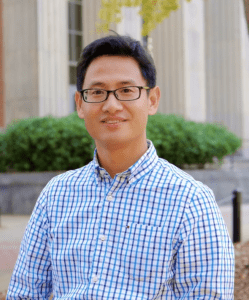
Principal Investigator: Shangpeng Sun, Department of Bioresource Engineering (McGill University)
Co-Investigators: Huong Nguyen (McGill University), François Grondin (Université de Sherbrooke)
Funding awarded: $100,000
In this project, we will develop an aerial–ground collaborative network, integrating hardware platforms and AI-powered software algorithms to enhance weed management practices in agricultural production. A UAV sensing system will be developed to generate accurate geo-referenced weed maps for entire fields, while a UGV sensing system will be deployed to perform precision spraying within identified weedy zones. This project aims to provide a practical solution for reducing herbicide use and supporting sustainable and resilient agriculture.
