
When
May 11th to 15th, 2026. 9:30 AM to 5:00 PM
Price
$70-$280
Members of the committee responsible for the workshop
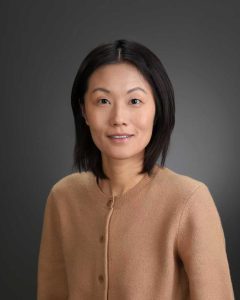
University of Alberta
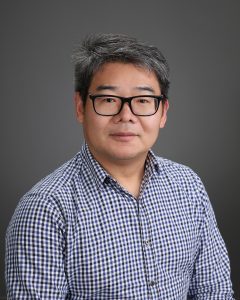
University of Alberta
AI systems are moving into high-stakes domains – health, finance, and public services – where errors, disparities, and privacy breaches carry real social costs. Much current practice is benchmark-driven and metric-optimized, but deployment demands evidence: error control, calibrated uncertainty, fairness that survives distribution shift, and governance artifacts that regulators and clinicians can audit. Statistics provides the spine for this evidence – clear estimands and identifiability, finite and non-asymptotic guarantees, uncertainty quantification, principled testing, and study design. This workshop convenes statisticians and AI/ML researchers to show how statistical principles translate into trustworthy AI systems – not just in theory, but in tools ready for practical use. Our aims are threefold: (1) bridge statistics and AI on shared deployment challenges – fairness, privacy, federated learning, distribution shift, and evaluation; (2) showcase methods with provable guarantees (coverage, error rates, privacy budgets, fairness tests) that are engineered for practice; and (3) catalyze collaborations between the statistics and AI communities, building a culture that treats trustworthy AI as an evidence-based, statistically grounded endeavor.
Confirmed Speakers
Elvezio Ronchetti (University of Geneva), Heping Zhang (Yale University), Huixia Judy Wang (Rice University), Jianqing Fan (Princeton University), Ji Zhu (University of Michigan), Jian Huang (The Hong Kong Polytechnic University), Junhui Wang (The Chinese University of Hong Kong), Lexin Li (Berkeley), Linjun Zhang (Rutgers University), Naisyin Wang (University of Michigan), Pankaj Bhagwat (University of Alberta), Ricardo Silva (University College London), Tian Zheng (Columbia University), Tracy Ke (Harvard University), Weijie Su (University of Pennsylvania), Xiao Wang (Purdue University), Xiaowu Dai (UCLA), Yuekai Sun (University of Michigan).
Agenda
Monday, May 11th, 2026
9:00 – 9:20 a.m. : Welcome and Registration
9:20 – 9:30 a.m. : Welcome address – Aurélie Labbe (HEC Montréal), Linglong Kong (University of Alberta) and Bei Jang (University of Alberta), Organizers of the workshop
9:30 – 10:30 a.m. : Weijie Su (University of Pennsylvania) – Alignment in Large Language Models: Statistical and Game-Theoretic Perspectives – The only conference given on zoom.
10:30 – 11:00 a.m. : Coffee break
11:00 a.m. – 12:00 p.m. : Tracy Ke (Harvard University) – Integrating pre-trained language models into topic modeling
12:00 – 1:30 p.m. : Lunch (not provided)
1:30 – 2:30 p.m. : Jianqing Fan (Princeton University ) – SMART Fine-tuning Factor Augmented Neural Lasso
2:30 – 2:45 p.m. : Break
2:45 – 3:45 p.m. : Yuekai Sun (University of Michigan) – Data-Mixing in LLM pretraining
3:45 – 4:15 p.m. : Coffee break
4:15 – 5:15 p.m. : Round Table Discussion
5:15 – 6:15 p.m. : Social Hour/ Mixer
Tuesday, May 12th, 2026
9:00 – 9:30 a.m. : Welcome and Registration
9:30 – 10:30 a.m. : Naisyin Wang (University of Michigan) – Utilize Synthetic Components to Systematically Reach Targeted Goals
10:30 – 11:00 a.m. : Coffee break
11:00 – 12:00 p.m. : Bei Jiang (University of Alberta) – Achieving Fairness-Utility Trade-off through Synthetic Data
12:00 – 1:30 p.m. : Lunch (not provided)
1:30 – 2:30 p.m. : Jian Huang (The Hong Kong Polytechnic University) – Representation-Based Diffusion Models
2:30 – 2:45 p.m. : Break
2:45 – 3:45 p.m. : Xiao Wang (Purdue University) – Coreset-Induced Flow Matching
3:45 – 4:15 p.m. : Coffee break
4:15 – 5:15 p.m. : Recap and Round Table Discussion
Wednesday, May 13th, 2026
9:00 – 9:30 a.m. : Welcome and Registration
9:30 – 10:30 a.m. : Ricardo Silva (University College London) – Cautious extrapolation of causal predictions from past experimentation
10:30 – 11:00 a.m. : Coffee break
11:00 – 12:00 p.m. : Pankaj Bhagwat (University of Alberta) – Universal Measures of Dependence for Complex Objects
12:00 – 1:30 p.m. : Lunch (not provided)
1:30 – 2:30 p.m. : Linjun Zhang (Rutgers University) – Evaluating LLMs When They Do Not Know the Answer
2:30 – 2:45 p.m. : Break
2:45 – 3:45 p.m. : Xiaowu Dai (UCLA) – Prediction-Powered Conditional Inference
3:45 – 4:15 p.m. : Coffee break
4:15 – 5:15 p.m. : Junhui Wang (The Chinese University of Hong Kong) – Understanding Partial Transfer in CNNs via Kronecker Product Regression
Thursday, May 14th, 2026
9:00 – 9:30 a.m. : Welcome and Registration
9:30 – 10:30 a.m. : Ji Zhu (University of Michigan) – Efficient Embedding and Generative Modeling for Hypergraphs
10:30 – 11:00 a.m. : Coffee break
11:00 – 12:00 p.m. : Lexin Li (Berkeley) – Brain Encoding and Decoding: Some Examples
12:00 – 1:30 p.m. : Lunch (not provided)
1:30 – 2:30 p.m. : Huixia Judy Wang (Rice University) – Fusion Learning of Biological Age from Multiple Epigenetic Clocks
2:30 – 2:45 p.m. : Break
2:45 – 3:45 p.m. : Tian Zheng (Columbia University) – Distribution-Informed Learning via Kernelized Stein Discrepancy Calibration
3:45 – 4:15 p.m. : Coffee break
4:15 – 5:15 p.m. : Elvezio Ronchetti (University of Geneva) – Robust Bayesian Learning
Friday, May 15th, 2026
9:00 – 9:30 a.m. : Welcome and Registration
9:30 – 10:30 a.m. : Round Table Discussion – From Prediction to Action: Statistical Foundations for Agentic AI
10:30 – 11:00 a.m. : Coffee break
11:00 – 12:00 p.m. : Round Table Discussion (Recap. discussion between Audience and Speakers)
12:00 – 12:15 p.m. : Closing Address
