
When
June 8th to 11th, 2026. 9:30 AM to 5:00 PM
Price
$70-$280
Members of the committee responsible for the workshop

McGill University
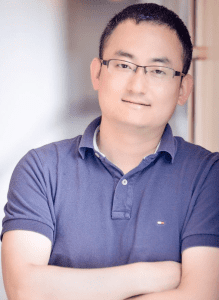
Toronto University
The momentum towards AI adoption promises that in our work, our play, and our decision making we will soon be – in fact, are already – surrounded by an array of AI tools and agents. At the same time, our understanding of the uncertainty associated with much of this emerging infrastructure is in its infancy. Uncertainty in its many guises, ranging from predictive accuracy of deep learning algorithms and hallucinations in generative AI, to a still largely empirically driven understanding of what AI is – and is not – capable of doing. This workshop would highlight principled ways that statistical theory and methods are contributing to our emerging understanding of the uncertainty that accompanies AI. And, simultaneously, how the pace of AI development is seeding innovation in statistics at a pace rarely seen before, particularly at the interface with similarly fast-evolving areas of applied mathematics. From Bayesian deep learning to the mathematics of transformers and their connections to interacting particle systems. From the analysis of transfer learning via optimal transport and similar ideas like flow matching to emerging formal characterizations of chain-of-thought reasoning. Bringing together statistical experts in AI from around Quebec, Canada, and the larger global AI community, this four day workshop would provide a rare opportunity for this group to converge at a still-relatively-small scale to discuss and continue to lay the foundation for statistical uncertainty quantification in AI.
List of Speakers
Ben Adcock (SFU), Chris Maddison (University of Toronto), Edgar Dobriban (University of Pennsylvania), Geoff Pleiss (UBC), Konstantinos Spiliopoulos (Boston University), Kun Zhang (CMU, MBZUAI), Maxim Panov (MBZUAI), Mehdi Dagdoug (McGill University), Mladen Kolar (MBZUAI, USC), Murat A. Erdogdu (University of Toronto), Philippe Rigollet (MIT), Pragya Sur (Harvard University), Qiang Liu (UT Austin), Rachel Morris (Concordia University), Tianxi Cai (Harvard), Xin Bing (University of Toronto), Xinwei Shen (UW Seattle), et Fanny Yang (ETH).
Program
Monday, June 8, 2026
Daily theme – Foundations of Uncertainty in AI: From measuring uncertainty to using it effectively
9:00 – 9:20 a.m. : Welcome and Registration
9:20 – 9:30 a.m. : Welcome Address IVADO Aurélie Labbe – Opening remarks Eric Kolaczyk and Qiang Sun, Organizers of the Workshop
9:30 – 10:15 a.m. : Philippe Rigolet (MIT) – Propagation of Chaos in Contextual Flow Maps
10:15 – 11:00 a.m. : Edgar Dobriban (University of Pennsylvania) – Case Studies in AI Uncertainty Quantification and Cont
11:00 – 11:30 a.m. : Coffee Break
11:30 – 12:15 p.m. : Maxim Panov (MBZUAI) – Rectifying Conformity Scores for Better Conditional Coverage
12:15 – 02:30 p.m. : Lunch (not provided)
02:00 – 02:45 p.m. : Kun Zhang (CMU/MBZUAI) – Causal representation learning and causal generative AI
02:45 – 03:15 p.m. : Coffee Break
03:15 – 03:45 p.m. : Round Table Discussion
03:45 – 04:45 p.m. : Initialization of Ad Hoc Working Groups
04:45 – 05:00 p.m. : Flash Talks Poster Session
05:00 – 06:00 p.m. : Social Hour/ Mixer
Tuesday, June 9, 2026
Daily theme – Conformal Inference & Reliable Predictions: Statistical guarantees and robustness of methods
9:00 – 9:30 a.m. : Welcome and Registration
9:30 – 10:15 a.m. : Archer Yi Yang (McGill University) – Multivariate Conformal Selection
10:15 – 11:00 a.m. : Mladen Kolar (MBZUAI, USC) – Confidence Sets for Causal Orderings
11:00 – 11:30 a.m. : Coffee Break
11:30 – 12:15 p.m. : Mehdi Dagdoug (McGill University) – Double Machine Learning for the Treatment of Nonresponse in Survey Sampling
12:15 – 02:00 p.m. : Lunch (not provided)
02:00 – 02:45 p.m. : Konstantinos Spiliopoulos (Boston University) – Global Convergence of Adjoint-Optimized Neural PDEs
02:45 – 03:15 p.m. : Coffee break
03:15 – 04:00 p.m. : Round Table Discussion
Wednesday, June 10, 2026
Daily theme – Learning with Limited or Complex Data : The core challenge: scarce data and complex structures
9:00 – 9:30 a.m. : Welcome and Registration
9:30 – 10:15 a.m. : Chris Maddison – Blood from a Stone: Finding Signal when Data is Scarce and Verification is Expensive
10:15 – 11:00 a.m. : Geoff Pleiss (UBC) – Beyond Calibration: Quantifying Uncertainty via Downstream Decision Making
11:00 – 11:30 a.m. : Coffee Break
11:30 – 12:15 p.m. : Xin Bing (University of Toronto) – Baby Transformer CODL learns latent domains
12:15 – 02:00 p.m. : Lunch (not provided)
02:00 – 02:45 p.m. : Ben Adcock Via Zoom (SFU) – Towards trustworthy deep learning for inverse problems: confident hallucinations and new theoretical guarantees for Bayesian recovery with generative priors
02:45 – 03:15 p.m. : Coffee Break
03:15 – 04:00 p.m. : Rachel Morris (Concordia University) – A geometric perspective on adversarial machine learning
04:00 – 04:30 p.m. : Round Table Discussion
Thursday, June 11, 2026
Daily theme – Causality, Robustness & Generalization : Reliable AI in the real world: causality, robustness, and distribution shift
9:00 – 9:30 a.m. : Welcome and Registration
9:30 – 10:15 a.m. : Murat A. Erdogdu (University of Toronto) – Learning Quadratic Neural Networks in High-dimensions
10:15 – 11:00 a.m. : Xinwei Shen Via Zoom (UW Seattle) – Generalization Beyond Observations: A Distributional Perspective
11:00 – 11:30 a.m. : Coffee Break
11:30 – 12:15 p.m. : Tianxi Cai (Harvard) – Uncertainty-Aware Robust Optimization for Durable AI: Managing Distributional Drift in Clinical Settings
12:15 – 01:30 p.m. : Lunch (not provided)
01:30 – 02:15 p.m. : Pragya Sur (Harvard University) – Toward Bayes-Optimal Multimodal In-Context Learning via Cross-Attention Architectures
02:15 – 02:30 p.m. : Coffee Break
02:30 – 03:15 p.m. : Fanny Yang (ETH) – Transfer Learning using benchmarks and causal invariances
03:15 – 03:30 p.m. : Coffee Break
03:30 – 04:15 p.m. : Recap. Discussion Audience/ G. Speakers
04:15 – 04:30 p.m. : Closing Address
